Mid-week, we received a visitor. During our conversation, students were getting ready to go outside. The children were efficient and independent, each following the established routine for dressing: snow pants first, then boots, jackets, mittens, and finally hats. The atmosphere remained calm, and the children completed these tasks with minimal adult assistance. Once ready, they lined up and proceeded to the playground.
The visitor observed that the children were significantly more self-reliant and composed than older students she had interacted with in traditional school settings. No one was crying, shouting, or misbehaving. This observation prompted me to reflect on why such positive behavior does not surprise us.
A Montessori pedagogy is a triangle formed by the Prepared Environment, Freedom within Limits, and a Trained Montessori Guide. One cannot exist without the other two. Freedom of choice without a prepared environment leads to chaos. A prepared environment cannot sustain itself without the keen observation of a trained teacher who prepares the environment to meet each child’s academic, social, and emotional needs. When all three elements are in sync, children learn to move with purpose, develop deep concentration, and cultivate a sense of inner order; traits of an authentic Montessori school.
I asked the visitor about the school’s environment. She explained that children were free to move and were not required to stay in one place all day. They learned one subject, then moved on to another lesson with the teacher. If the children had freedom of movement, why were they not composed and self-reliant?
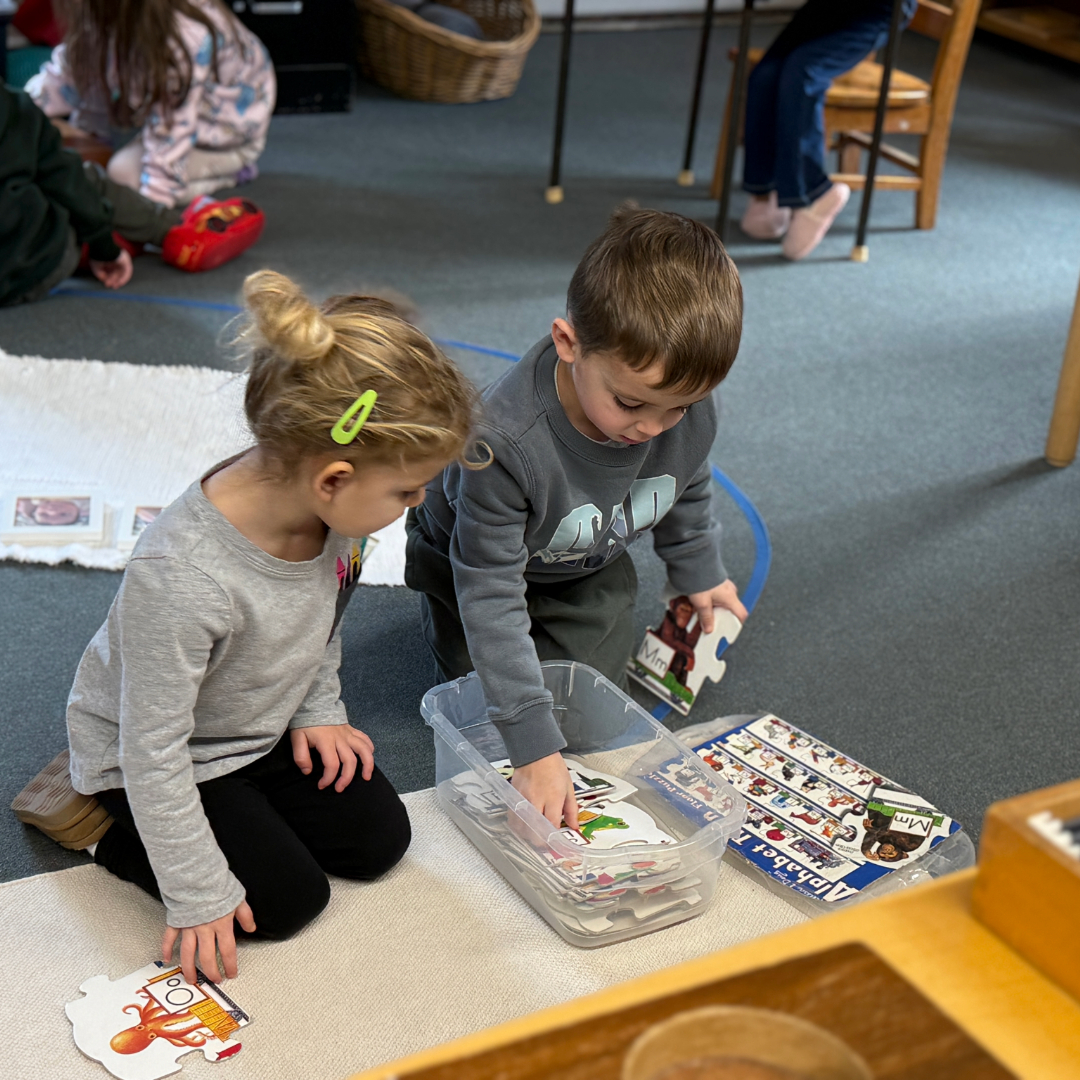
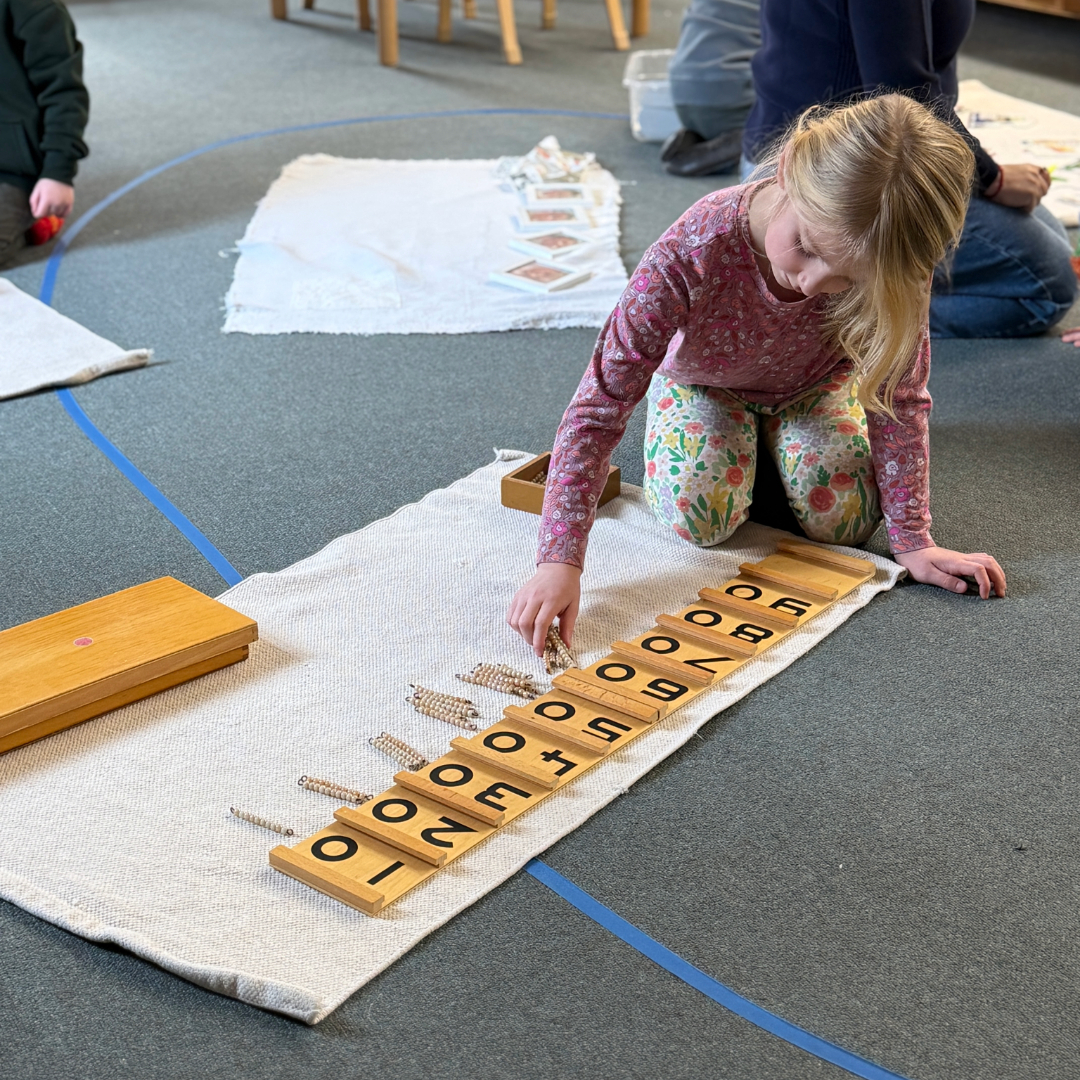
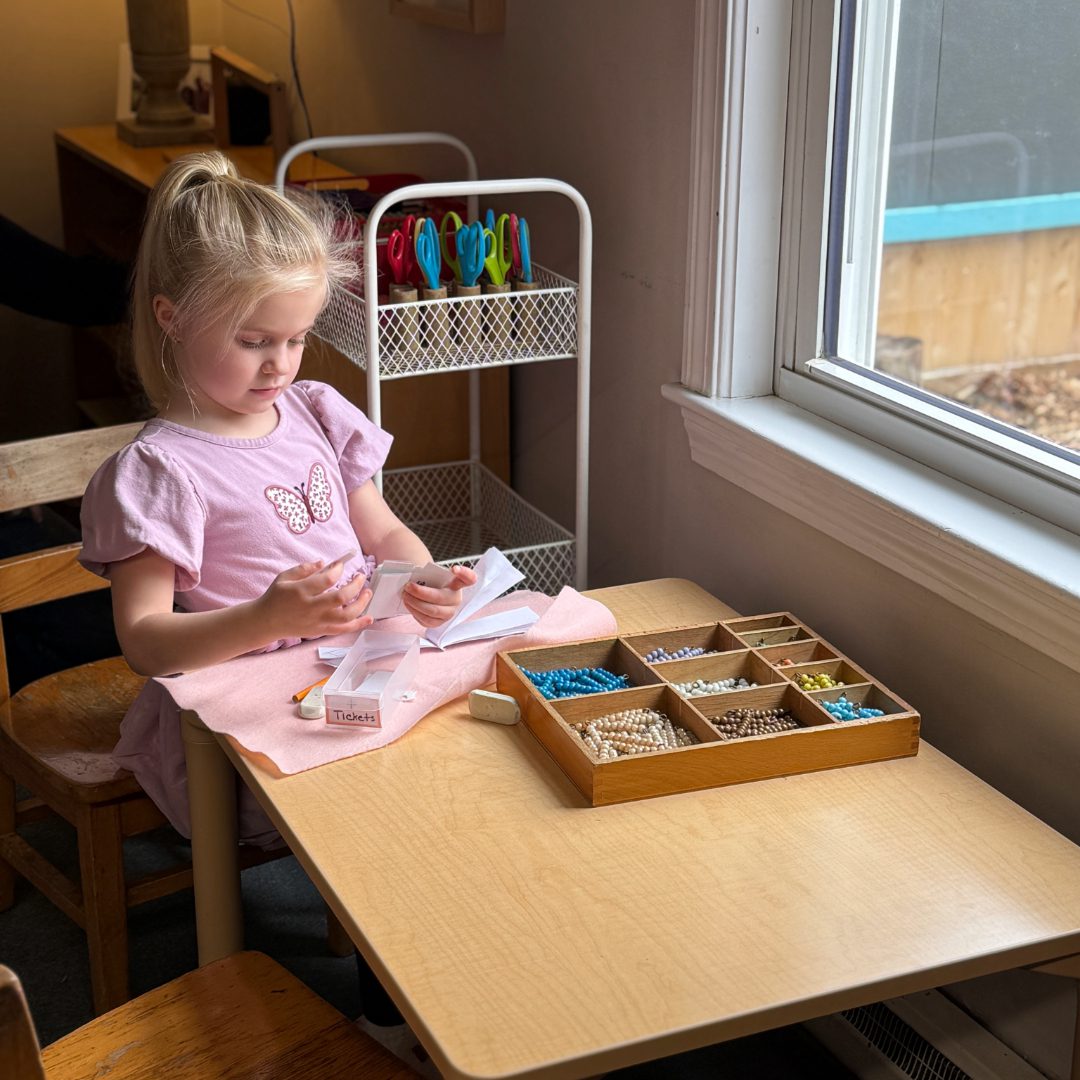
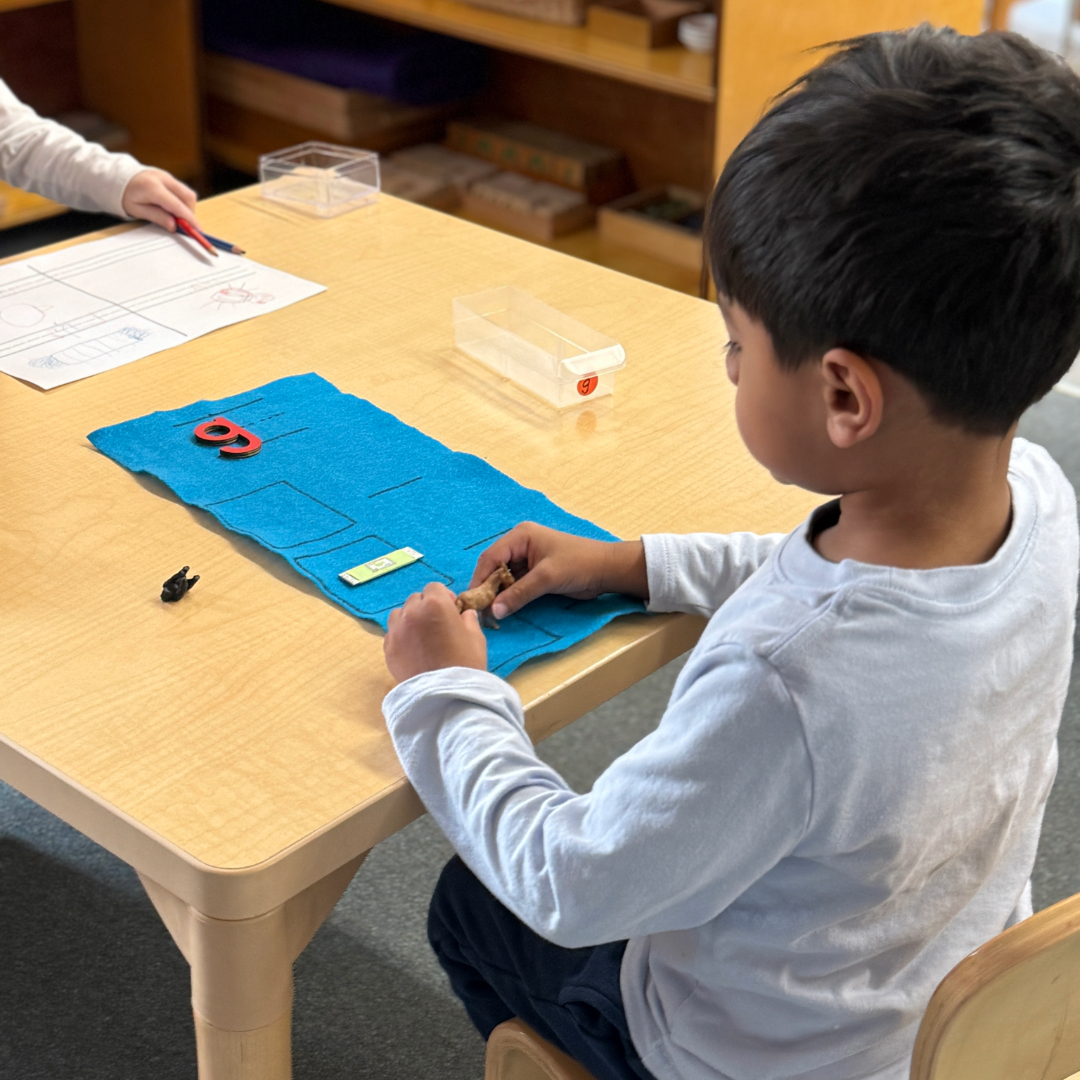
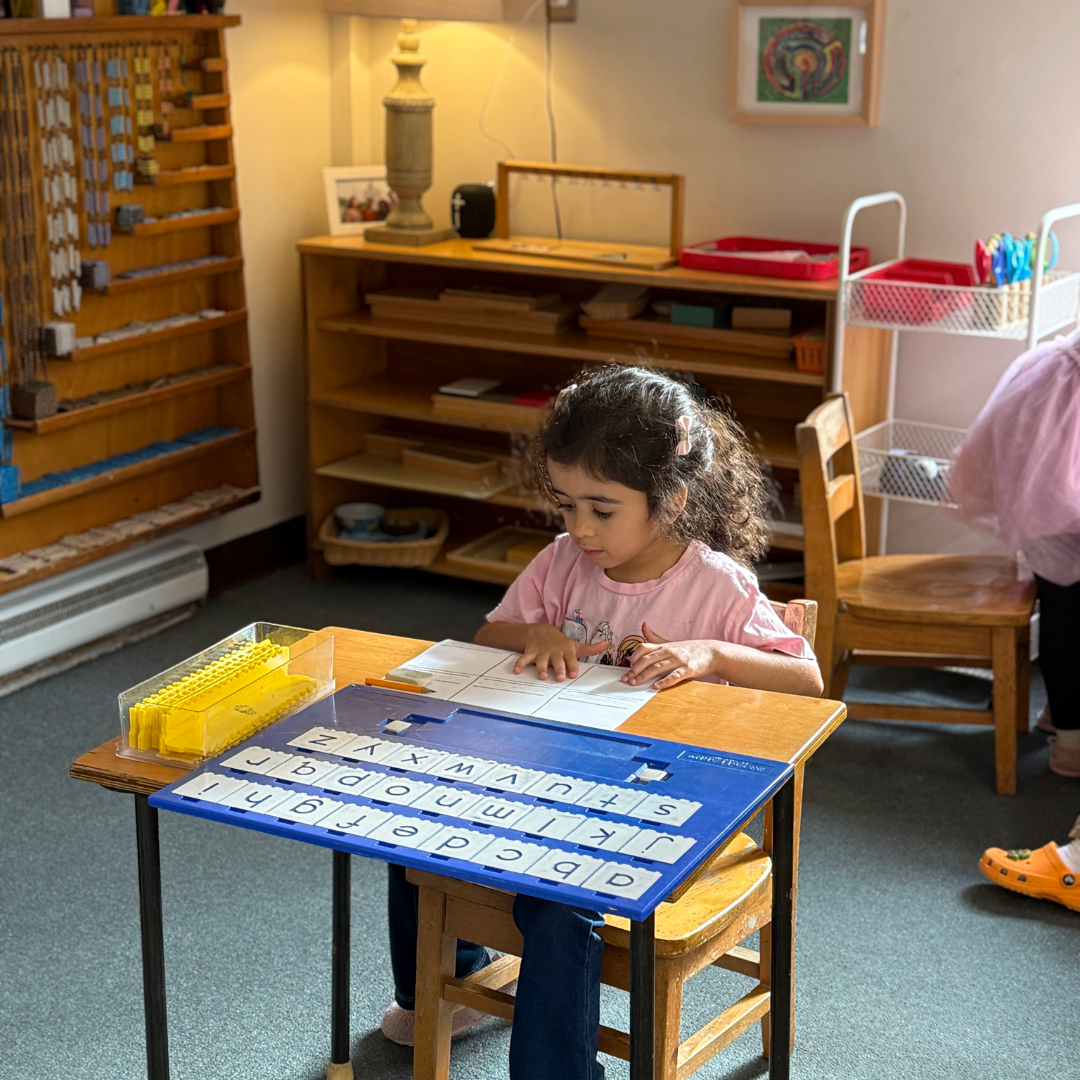
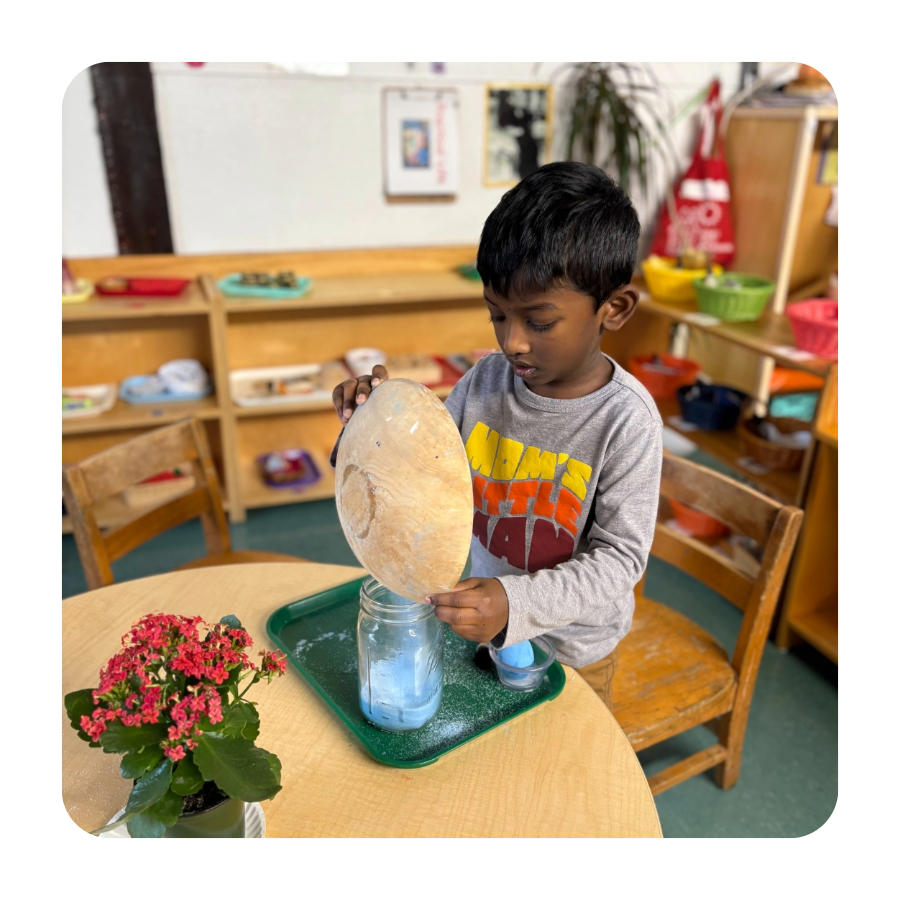
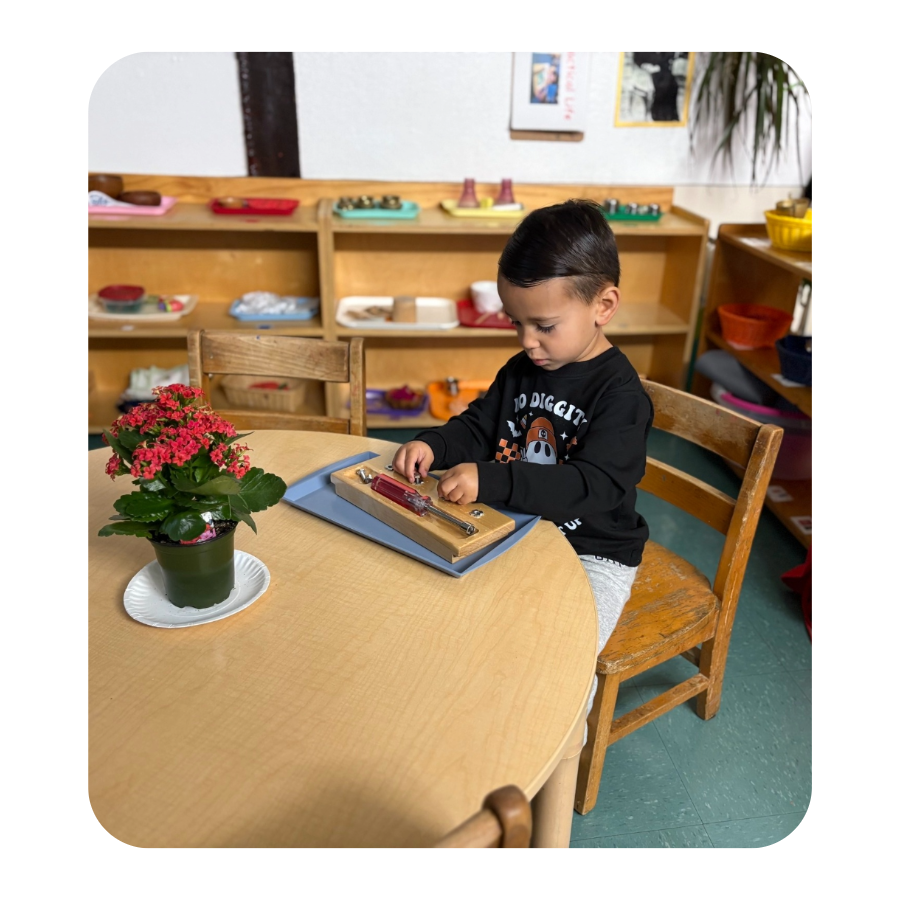
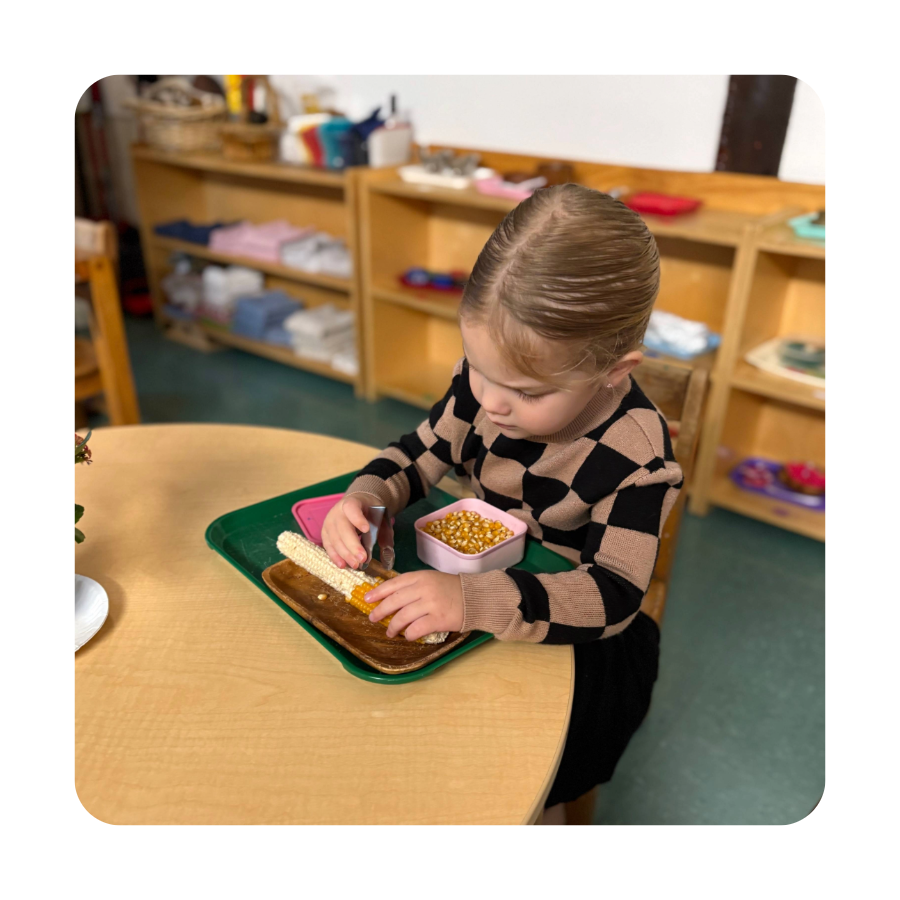
This highlights the critical role of the Montessori Prepared Environment. As noted, freedom of choice without a carefully curated environment leaves children bored and without a sense of purpose. Montessori classrooms are not only aesthetically pleasing; the educational materials, designed by Dr. Montessori after careful observation, provide children with meaningful choices and engage them in purposeful activities.
Each material teaches lessons in practical life, sensorial development, math, or language. Every activity has a clear purpose. The uninterrupted work cycle allows children to work with materials as long as needed, supporting mastery and meeting their developmental needs. Often, children enter the classroom and immediately choose activities such as knobbed cylinders, polishing, or maps, working diligently until they internalize the concept. The teacher periodically introduces new materials to keep children engaged and expand their knowledge.
Montessori pedagogy requires all three elements to work together. Only then can we provide children with an ‘Educational Foundation That Lasts A Lifetime.’
We invite you to observe our classroom and experience this approach firsthand. Our Open House will be held in March. You can register for both opportunities on our website.